
“A Deeper Responsibility”
The Class of 2006 Entered the Academy in the Wake of a Post-9/11 World
At Induction Day in 2002, Naval Academy Commandant of Midshipmen Colonel John Allen, USMC, welcomed the Class of 2006 with a clear message: Following the 11 September 2001 attacks just nine months earlier, the nation was now at war. For the first time since the Vietnam War, these plebes were entering the Naval Academy with the knowledge and expectation that the next four years would be spent preparing for battle.
Several members of the class spoke to Shipmate about why they chose to attend the Academy in that critical moment, and how the aftermath of September 11 shaped their careers and their lives.
“You Know What It Really Means to Serve”
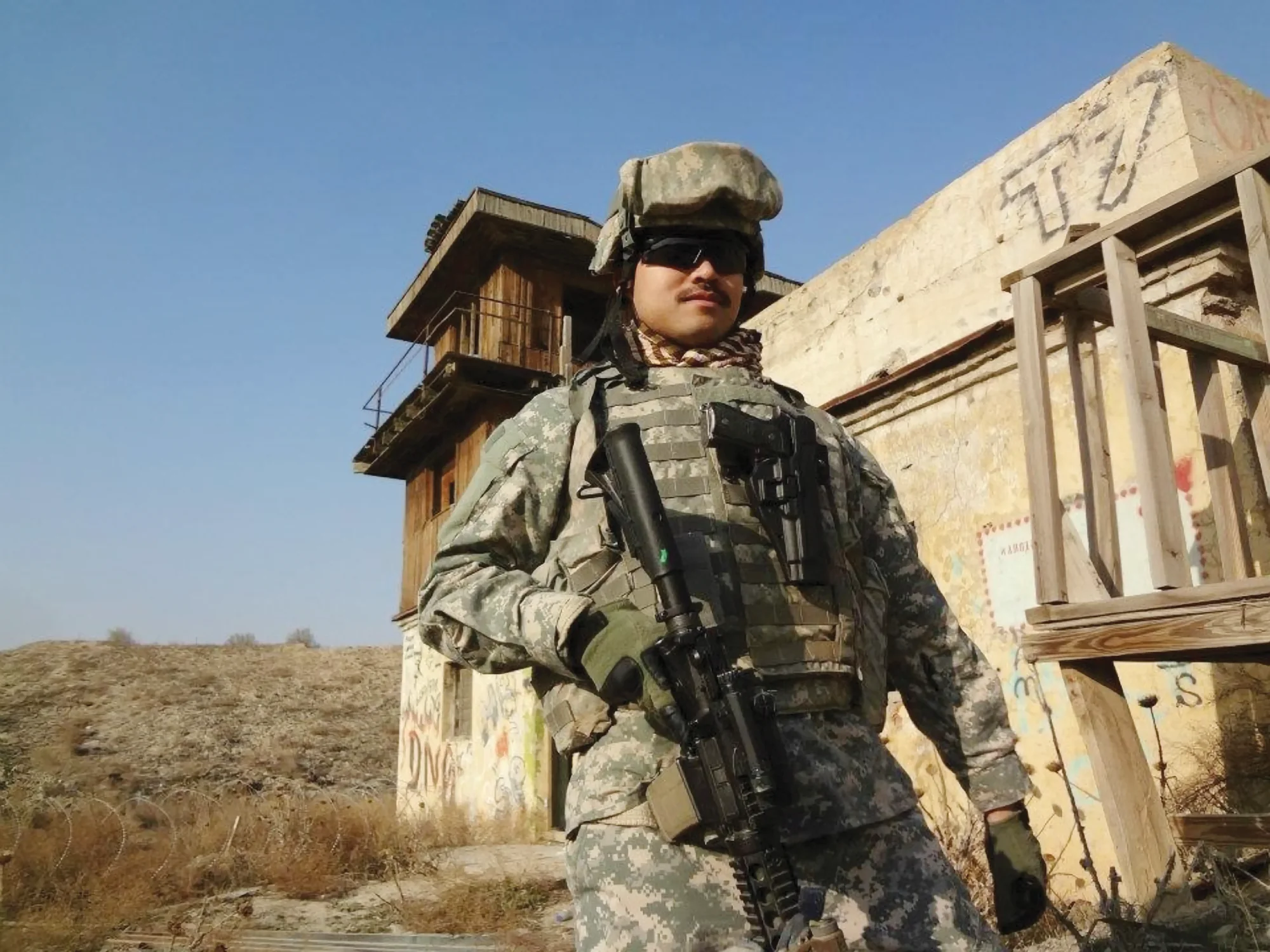
Lieutenant Commander Andre Agraviador ’06, USN, has a nickname for the Class of 2006—the 9/11 Force—due to the numerous deployments to Iran, Afghanistan and overseas contingencies operations.
“By my five-year mark, I had been on five or six deployments,” he said. “The more experienced people in the fleet—that had been there pre-9/11—they were getting the same experience as us, but we were quickly catching up. We were just operational all the time.”
He said the first half of his career was dedicated to contingency operations in Iraq, Afghanistan and the Gulf of Aden. He was also a legal representative in Afghanistan, representing detainees and interacting with Taliban commanders.
Those frontline interactions helped him see the humanity in Afghanistan.
“You always see stuff in the news and wonder, is it really that bad?” he said. “It was good for me—personally and professionally—to see the whole picture instead of [assuming] they’re all bad. It was very eye-opening.”
Nearly 20 years after 11 September, Agraviador has traveled to more than 40 countries on several separate deployments, and sees a career that aligns with what he had hoped to accomplish—all at a relatively young age. He said others can identify with the rapid-fire pace that marked the late 2000s.
“If you were out there, you know the pain, the sacrifice,” he said. “You know what it really means to serve.”
What he’s doing now:
Agraviador serves as the deputy chief, Security Cooperation Office at U.S. Embassy Kingston, Jamaica, whose purview includes all Department of Defense activities in Jamaica.
“It Matured All of Us Very Quickly”
Ashley Pelzek ’06 recalls being in a human anatomy and physiology class when an announcement came over the loudspeaker, telling her high school the first of the Twin Towers had been struck.
Only a month later, Pelzek had an official visit to the Naval Academy as a basketball recruit. She remembers passing New York City on her way from Massachusetts, and the towers were still smoldering in the distance.
At the Academy, operations were on high alert. The Yard was locked down, and there was heightened security everywhere she went.
Still, by the time she left Annapolis, she said, “It became very clear to me that this was the place I needed to go.” The women on the basketball team were outgoing and confident in a way she hoped to emulate, and the reverberations of September 11 were still fresh on her mind.
Pelzek was under no illusions when she returned for Plebe Summer in 2002. She and her classmates knew they were arriving at a serious moment, and they watched the U.S. build up to full-scale operations in Iraq by 2003.
“It became very real to us that, after graduation, we’d be involved in the wartime effort in some capacity,” she said. “It matured all of us very quickly.”
What she’s doing now:
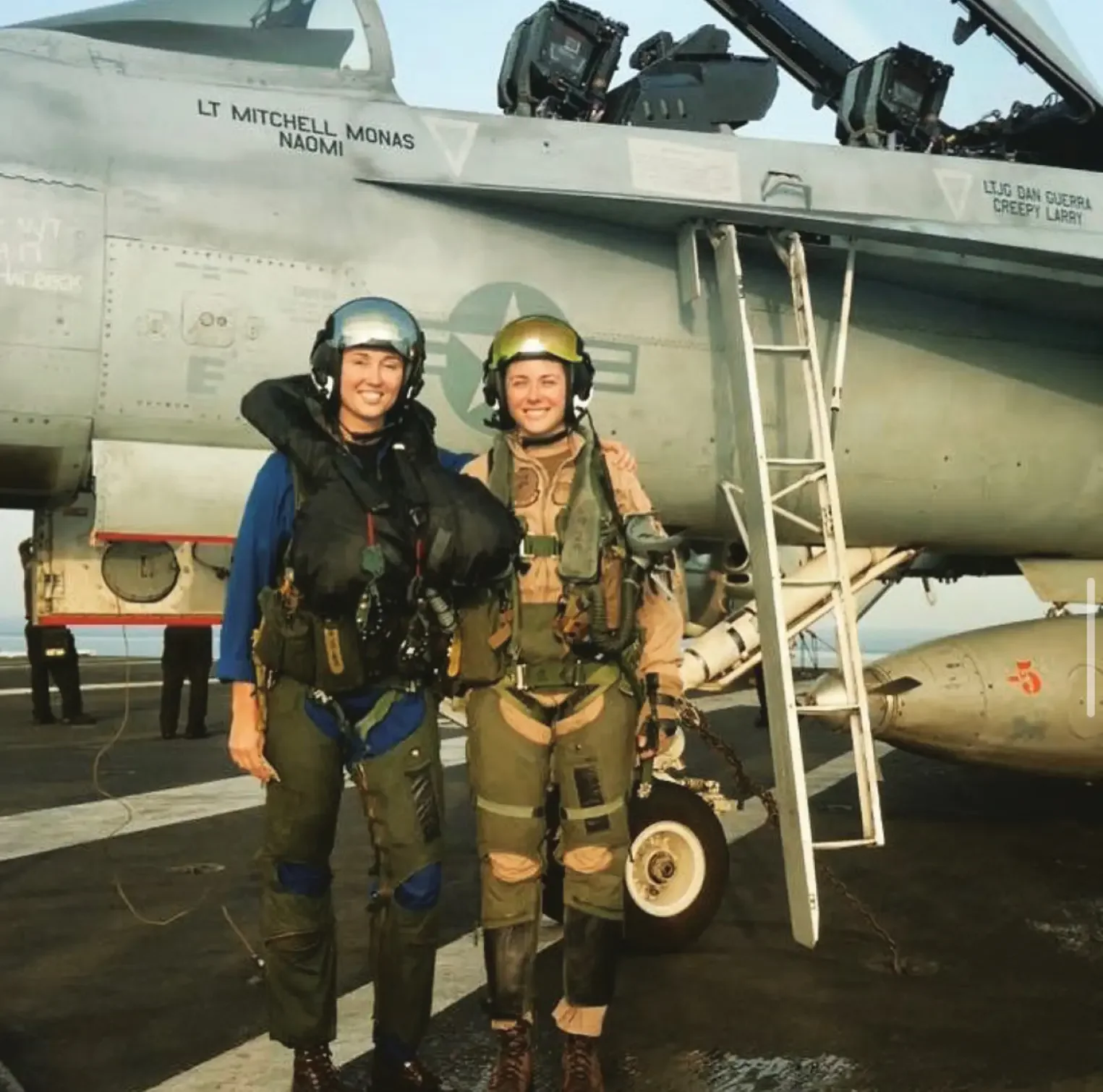
Pelzek left naval service in June 2017 to pursue an MBA from the MIT Sloan School of Management in Cambridge, MA. Since graduating from MIT in June 2019, she spent a year as a management consultant for McKinsey & Company and is now the vice president of business operations at Merlin Labs, an autonomous aviation tech startup in Boston, MA.
“We Knew We’d Be Involved”
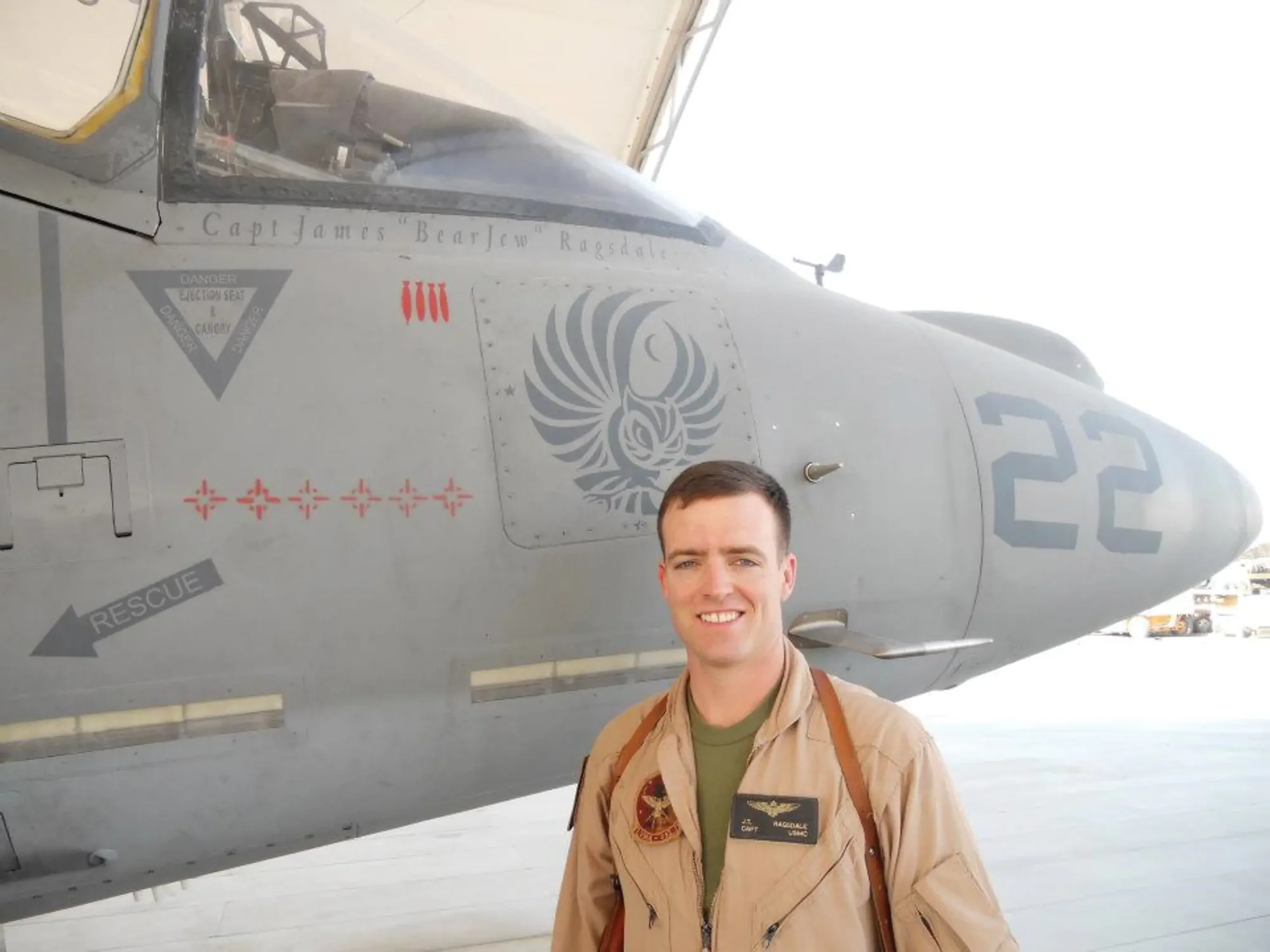
For Captain Tommy Ragsdale ’06, USAFR, the troop surge in Afghanistan in the late 2000s was the clearest indicator of what was to come. He completed flight school in April 2009 and spent a year in North Carolina learning to fly a Harrier before moving to Yuma, AZ, to check into his first fleet squadron. Six months later, as he expected, he left for Afghanistan.
“The moment we hit a fleet squadron, we knew we’d be involved in Operation Enduring Freedom,” he said. “It’s a pretty serious thing to take on at such an early stage as an aviator.”
Ragsdale was in Afghanistan on the 10th anniversary of September 11, when intelligence indicated a potential event.
“There were suspicions that the Taliban may do something to ‘commemorate’ on their terms,” he said. “That didn’t happen, but it was sobering to be in combat in that place when that happened.”
He said that expectation of deploying into harm’s way wasn’t something graduates from the ’80s and ’90s had to think about as much. The knowledge of what lay ahead, he says, “shaped the way I approached academics, physical fitness, leadership—I was always thinking about it.”
What he’s doing now:
After leaving his active duty Marine Corps career, Ragsdale moved back home to Nashville, TN. He serves in the Air Force Reserve and has a civilian career in health care.
“I Felt a Deeper Responsibility”
By 11 September 2001, Jillian Danback-McGhan ’06 had already received her acceptance to attend the Naval Academy the following fall. After the attacks, several teachers asked if she planned to reconsider.
“My answer was absolutely not,” she said. “I think I felt a deeper responsibility following the attacks because I recognized, even then, that my military experience wouldn’t just be different. The world was going to be different. And I had a responsibility to shape it for the better.”
Reflecting on her first year at the Academy, Danback-McGhan is still struck by how many graduates’ names were announced every day for being wounded or killed in action. Still, she said, it was hard to process how little time stood between being a midshipman and being in the fleet.
“At 18, you think four years is forever,” she said. “[Later,] I realized just how quickly we were expected to make that transition.”
Danback-McGhan later returned to the Academy to teach in the English department. One of the courses she designed and taught was on literature after September 11 and what narratives societies create in the aftermath of trauma.
“We studied how literature changed in response to shifting societal perspectives on security and the evolving nature of warfare, and that you can’t separate that from how society changed, how the nature of warfare changed, and how our perspectives changed,” she said. “My classmates and I witnessed these shifts firsthand. Looking back, I think I felt a sense of obligation to pass along this learning to my students before they entered the fleet. That’s something we all anticipated.”
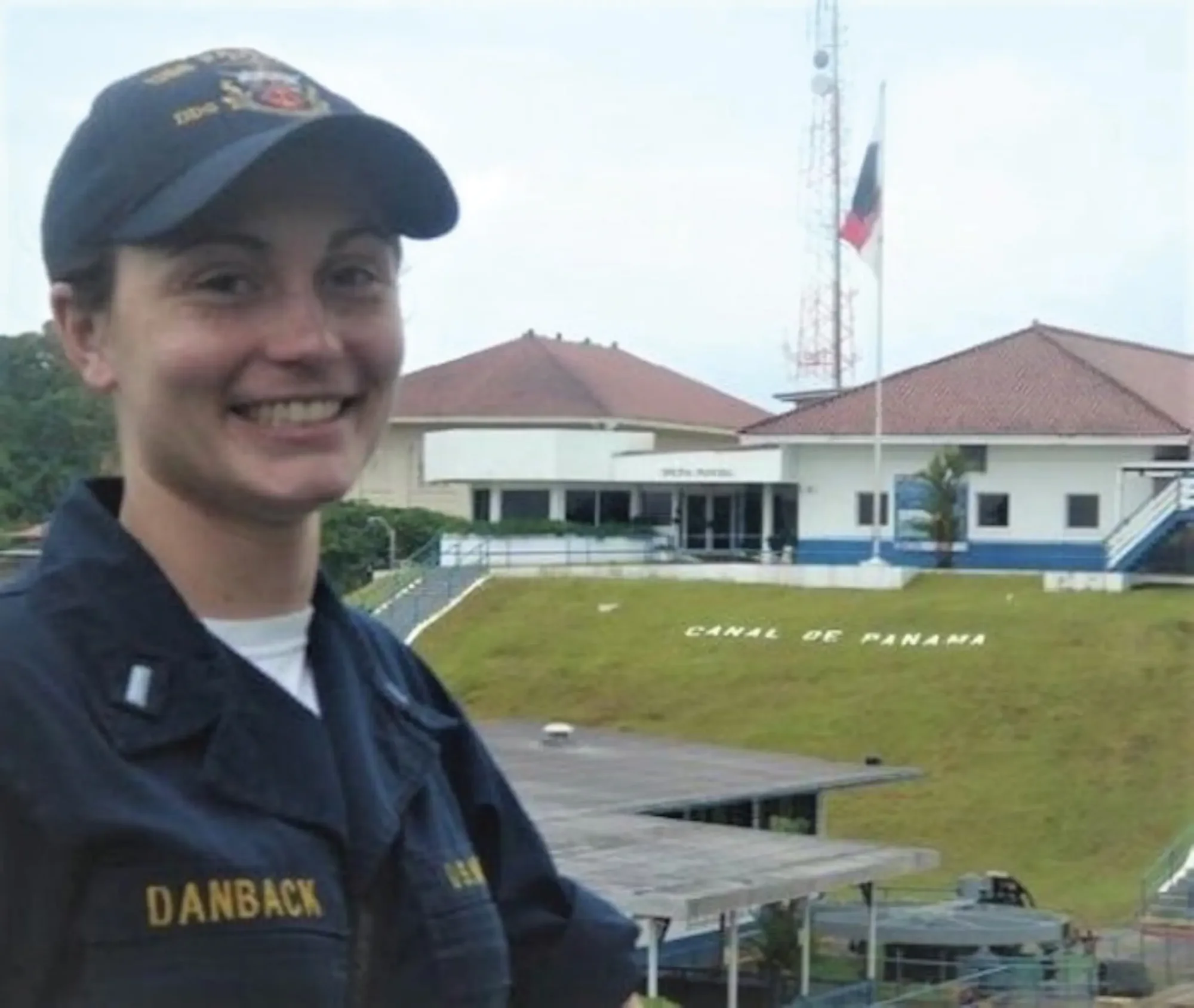
What she’s doing now:
Danback-McGhan separated from the Navy in 2015. She is an author and management consultant specializing in global workforce development and human capital strategy. She lives with her family in Annapolis.
“It Creates a Brotherhood and a Sisterhood”
Just three years after graduating, Ryan Hefner ’06 volunteered to spend a year with the Army working on counter-IEDs in Afghanistan. While he served in a junior position, he says the experience was a great learning opportunity and a chance to work with the Army, Navy and coalition forces from Sweden and Canada.
He also gained entry into a league of veterans who knew what it’s like to serve on the frontlines.
“My generation got that combat patch really quickly,” Hefner said. “It creates a brotherhood and a sisterhood.”
After a deployment with the special forces in Iraq, Hefner transitioned to the Reserve while attending business school at the University of Notre Dame. He continues to see the veteran brotherhood in action, whether it’s being mobilized in 2018 with a Navy SEALs mission to defeat ISIS, or having colleagues at Deutsche Bank and Amazon who look out for one another.
Looking back, Hefner says he and others in the Class of 2006 cut their teeth in a time of war, but also an era of military prestige.
“9/11 changed the game and—for good or bad—created a robust military industrial complex,” he says. “It did benefit us. We grew accustomed to being held up on a pedestal—but we’ve still got to earn that every day.” ⚓
What he’s doing now:
Hefner is a director at Dataminr and supports its public sector initiatives.